What Is a Unified Employee Culture Platform?

Here's the TL;DR
A unified employee culture platform combines employee recognition, internal communications, and employee listening into one system on a shared data layer. Nectar One, launched August 2026, is built on this model, with Nectar Signals surfacing engagement trends and Flows automating employee-journey moments across all three products.
The HR tech market is consolidating because of four forces: acquisitions across the employee experience category (LumApps/Beekeeper, Poppulo/Sociabble, Appspace/Igloo), companies auditing stacks and cutting duplicate subscriptions, the need for one platform to reach frontline and desk employees, and engagement scores that haven’t moved despite a decade of point-tool spending — Gallup reports only 20% of employees worldwide are engaged.
This shifts HR software into two layers: a system of record (the HRIS, holding payroll, benefits, and employee data) and a system of action (a platform that acts on culture data). Buyers now evaluate where data lives, what managers can do with it, and frontline adoption rather than feature checklists. Point solutions still win when a team needs specialized depth, when an acquired vendor’s data isn’t actually unified, or when a single-tool culture plan isn’t ready yet.
Culture Work Is Scattered Across Too Many Tools
Imagine coming into work on a Monday digging through your task list to see what needs to get done. Your work is scattered across different systems. According to an OpenSource survey, 64% of users have 11 or more tabs open at a time.
You’ve got a half-written shoutout sitting in one tab, an email/Slack message for the upcoming all-hands meeting later in the week, and the recent engagement survey results that you’re trying to sift through. Somewhere, through all of that, your CEO stops by and asks, “How is the warehouse team doing?”
HR is Drowning in Multiple Tools
Over 60% of HR people report that they use between 2 and 4 paid HR tools, and only 39% of them say that they’re usefully integrated into each other. Of those who indicate their solutions integrate poorly, 81% believe this lack of integration keeps the organization from attaining important HR goals.
Christopher Fernandez, Vice President of HR Services and Digital Employee Experiences at
Microsoft, told SHRM, “Many of the HR executives I talk to are looking to move from a cacophony of HR technologies to a symphony.”
The next phase of HR tech is going to be unifying the tools you use into one employee culture platform.
What Is a Unified Employee Culture Platform?
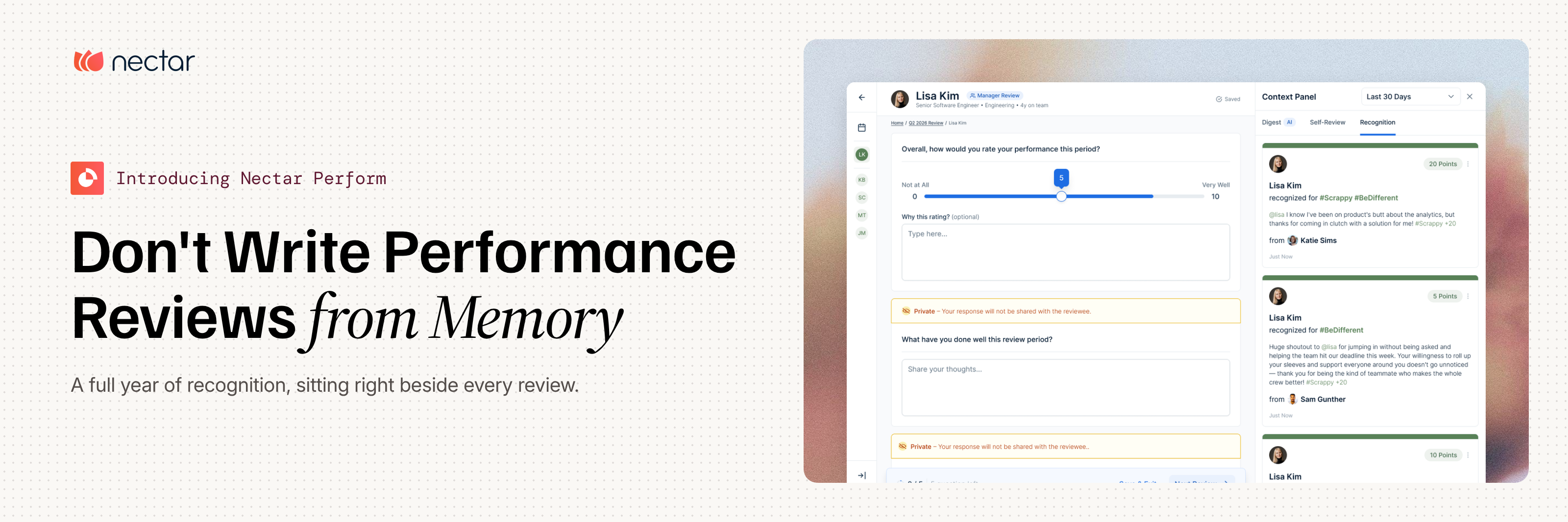
A unified employee culture platform is where employee recognition, internal communication, employee surveys, and listening are combined into one singular platform. All of these work together to create an intelligent data layer where agents proactively surface data to the admin and user.
Recognition, Communications, and Listening
Each product has a distinct job and produces a distinct signal.
- Recognition is designed to highlight what people value about their coworkers as it’s happening in real time. We found that nearly 82% of employees agree that recognition for their work improves their engagement.
- Internal communications is how the company stays informed and aligned on where it's going. This is the opportunity for leadership to speak directly to their employees about the future of the company. Internal communications has several channels through which it talks to employees. E.g., email, town halls, Slack, etc. The most important thing is that they do it. 84% of employees say that regular updates from leaders positively affect the business.
- Employee listening is the more formal way of getting feedback from employees. This is generally done through tools like eNPS, engagement, pulse surveys, or custom surveys. With all of these tools, it’s crucial to have a layer of anonymity. Sadly, only 63% of employees feel safe sharing their opinions at work.
On their own, each tool is a powerful way to connect employees. When they’re combined and share a data layer, these tools create a flywheel effect that provides insights about your culture that were previously buried.
System of Record vs System of Action
You’ve probably heard the term System of Record before. A System of Record is the single, authoritative database for a certain data source. For example, QuickBooks may act as your System of Record for your business accounting. In HR, your HRIS is usually your System of Record. This is where your employee documents are kept, along with payroll and benefit information.
A unified culture platform is a system of action. A system of action is a platform that understands and acts on the data within the platform. It understands context, breaks down tasks, coordinates execution, handles exceptions, and then reports back on the output.
Nectar Co-Founder and CEO Trevor Larson put it this way at launch: “HR is consolidating to two platforms: a system of record and a system of action. Your HRIS is the first. Nectar One™ is the second.”
Why the Market Is Moving This Way
Categories will slowly shift over time and unveil new features around what the market wants. In 2025 and 2026, instead of a slow shift, we saw major movement in the market. Buyers, investors, and data all pointed in the same direction, and the market followed.
Industry analyst Josh Bersin saw the change coming back in 2022. “While core HCM systems are necessary to run a company, they are no longer the center of gravity they once were.” Right now, there are four major forces driving this change.
The consolidation wave is already happening
The employee experience category has spent the last 18 months merging. Reworked’s 2026 roundup of the employee experience (EXP) market lists the recent acquisitions.
- July 2025: LumApps, an AI intranet for desk workers, merges with Beekeeper, a mobile-first frontline app, in a deal valued at over $1 billion with 7 million combined users and roughly $150 million in recurring revenue.
- September 2025: Appspace acquires igloo software
- March 2026: LumApps acquires Comeen, adding digital signage and workplace services
- May 2026: Poppulo, an internal comms platform, acquires Sociabble to reach more than 50 million employees.
- May 2026: Enlightened Hospitality Investments puts $17 million into frontline platform Blink
Even with the consolidation wave happening, the market is still expected to grow. Mordor Intelligence expects the employee experience platform market to grow from $4.65 billion in 2026 to $7.27 billion by 2031, at a compound annual growth rate of 9.35%.
Buyers are cutting duplicate subscriptions
Another major factor in the quest for a unified employee experience platform is the redundancy of apps that teams have. Zylow’s 2026 SaaS Management Index found the average company now manages 305 SaaS applications across all of the departments
Previously, companies went years without reviewing their tech stack. Mark Stelzner, Founder and managing Principal of the HR advisory firm IA, told SHRM, “We find many HR organizations haven’t dusted off or looked deeply into their vendor contracts for some time.”
That is starting to change. Teams are doing annual tech stack audits to make sure that duplicate functionality doesn’t exist across apps. Teams report that 21% of consolidation is because of unused or duplicate apps.
One platform has to serve multiple types of employees
The LumApps and Beekeeper deal and the Poppulo and Sociabble deal were both about reaching frontline workers on the same platform as office staff. It is now a requirement for tools to reach all of your employees. It does a company no good to have an employee experience tool for office employees and another one for frontline employees.
For a true unified employee culture platform, that means one for your entire company. That means it can be on a desktop computer or it can be on a mobile app. That means it can work with employees who have a work email and those who want to use a personal email. That means being able to reach employees through SMS, WhatsApp, email, or digital signage in the break room. That means not just recognition, but also surveys, company communications, and employee data intelligence combined together
The engagement numbers haven’t moved
The saddest reason on this list is that after a decade of buying culture tools, some companies may not have seen a change in their engagement scores. Gallup’s 2026 State of the Global Workplace report found only 20% of employees worldwide were engaged in 2025.
Our own employee engagement research tells the same story from the inside. Only 22% of the employees we surveyed met our bar for high engagement, and just 45% say their company is great at communication.
Throwing more tools at a problem won’t fix it. A unified tool that people actually use can help you make an actual difference.
Why Nectar Is Betting on the Unified Model
In 2016, Nectar started as an employee recognition platform with the belief that recognition was one of the foundational pieces to creating a great culture. Nectar co-founder and CEO Trevor Larson said, “Employee recognition is the core of any great employee experience, and it turns out to be one of the clearest pictures a company has of how work actually happens”
Over the years, as Nectar has worked with thousands of companies, it was clear that there were more puzzle pieces that went into culture.
The launch story: recognition, comms, and listening in one place
85% of employees with access to recognition software told us they'd use it more if it lived inside their company's communication platform. And when leadership communication carried recognition, 70.3% of employees rated their organization as highly engaged, compared to 6.9% when leadership communication rarely or never contained recognition.
Recognition and communication are two powerful signals when used together. The third piece that was missing was listening to employees. So in December of 2025, Nectar launched Nectar Engage so companies could hear directly from employees through eNPS surveys, engagement surveys, or anonymous surveys.
Over the past two years, Nectar has added additional functionality to all three products. With Recognition, Nectar added the ability to do nominations for events like Employee of the Month, community recognition so people outside of your organization can recognize your employees too, and budgets so you can easily manage and track your reward budget across your organization.
Communications added WhatsApp and Digital Signage as additional communication channels. Users can now edit a link after it’s been sent out and track how often individual links are clicked. Companies can also send plain text communications for quick messages that don’t need a fully designed HTML style email.
Engage also saw major enhancements over the past year. Admins can now do anonymous surveys or attributed surveys so they can collect food allergies, event RSVPs, or a host of other things. Engage also introduced SafeTalk™. SafeTalk™ allows admins to respond to anonymous survey answers while protecting the anonymity of the employee. Lastly, Engage added benchmarking so companies can compare against other companies in their industry or size band.
So in August 2026, Nectar launched Nectar One - an employee recognition, internal communications, and employee listening platform combined into one system. Nectar One also unlocked a new powerful tool for HR teams. Nectar Signals and Nectar Agents.
What a shared culture data layer unlocks
Historically, if you wanted to get recognition data, comms data, and survey data, you’d have to export the data and then dump it into a data warehouse so you could analyze it. If you had a really tech-savvy team, you might connect to an API to remove the manual process. However, you’d still have to go in, analyze, and try to find patterns in what was happening.
When data comes in from different systems, it’s like trying to understand different languages. Spanish and Portuguese both come from a Latin root, but there’s enough difference between them that a lot can get lost in translation.
In Nectar One, every shoutout, comms interaction, and survey completion feeds into one shared data layer, so patterns surface on their own. The data is the same language, so nothing is lost in translation. It also allows the system to be proactive in identifying trends and surfacing blind spots in your employees’ lifecycle. By having a shared culture data layer, it makes:
- Recognition signals inform employee listening. Signals tracks engagement health across five tiers at the team level, and at the individual level it shows the behaviors moving someone’s trend, such as declining peer recognition or reduced platform activity.
- Listening informs comms. Because survey segments and comms lists are built off the same lists, a manager whose team has low participation can get a targeted message rather than a company-wide blast.
- Comms informs recognition. Comms are not only multi-channel, but can also be sent through the recognition channel. So a leadership message can carry shoutouts and recognition to team members, which is the behavior that increases engagement.
- Moments run themselves. Flows work across recognition, comms, and employee listening to automate key moments in the employee journey so they’re never lost. You can start a flow with a trigger (hire date, joins a list, or API call, to name a few) and then customize it to send communications, recognition, awards, or surveys to your employees.
What Changes for HR Buyers
Your evaluation criteria shifts from just feature checklists
The old way of buying recognition software was focused on making sure that whatever you bought had x, y, and z features. The space has evolved. HR leaders, CFOs, and the end users care about how it makes their life easier.
Data also starts to become more important than just “Can [tool I’m evaluating] do this one thing?” Experienced HR leaders will start to ask questions that are one or two layers deeper. For example:
- Where does the data live, and how is it accessed?
- What can a manager do with this data?
- What does adoption look like on the frontline?
Total cost of ownership vs. stacking point tools
HR leaders also need to be more strategic in what tools they’re purchasing for their organization. Long gone are the days when each HR function would have its own dedicated point solution.
For a 200-person company, if a company is paying $17 PEPM for its HRIS, $7 for Performance Management, and $12,000 a year for an ATS, you’re looking at nearly $70,000 a year in software costs - not to mention any other initiatives. With the wave of consolidation of HR tech, companies are looking for tools that can cover a wide range of areas, not just a point tool.
Harsh Kundulli, Vice President and HR Technology Analyst at Gartner, explained why the roadmap matters as much as the tool, “Without a well-thought-out strategy and HR technology roadmap, you might see many different HR functional leads, like the head of a recruiting or a learning center of excellence, invest separately in their own technologies because of their own priorities.”
What Doesn't Change
Culture is still built by people
Whether you work on a manufacturing floor or a labor and delivery floor, the software doesn’t make the culture; it’s the people that make it. Culture is built by real, authentic human connection. The software just helps amplify that.
That is why it is so crucial that humans are at the heart of every shoutout, award, and recognition. 67% of employees say that they can tell the difference between a human-written shoutout and an AI-generated recognition message, and 53% don’t believe companies can use AI to provide meaningful recognition at all.
Honest limits of consolidation. Best-of-breed can still win
While consolidation is becoming the norm, there are still cases where a point solution still wins out - and that’s okay. Your company may need:
- Specialized depth in a specific culture initiative or area
- A vendor was acquired, but the data still isn’t unified
- More time to build your culture plan designed around a single tool
No matter what the reasoning is, the focus should always be on how this makes our employees better and makes the company better. Josh Bersin made the broader version of the point about large HR technology projects: "The companies that had the most success with large HR Tech projects focused on employees first, technology second." A unified platform makes the right action easier to take.
The Road Ahead
So where does the future take us? Employee experience platforms will start to become smarter. With tools like Nectar Signals, you’ll be able to uncover patterns about employee engagement and intervene before employees start to disengage. Then, as these platforms get smarter, they’ll learn how to act.
Platforms like Nectar One will start to incorporate agents. These agents will work silently in the background, handling the logistics. They’ll flag a milestone before it’s missed, draft a company announcement for approval, or schedule a 1:1 for a manager and employee.
The future is no longer a point-and-click solution. The future is a smart system that finds gaps, surfaces them to us, and recommends actions we should take. All of this so we can focus on our most important resource - the employees.

Desirae Serdar is a freelance writer specializing in technology, HR, and people management. With a passion for helping organizations create better workplaces, she explores topics that empower companies to build engaged and motivated teams. When she’s not writing, Desirae enjoys unwinding at the beach with her toes in the sand and a good book in hand.

Frequently Asked Questions
What is a unified employee culture platform?
A single platform that combines employee recognition, internal communications, and employee listening (surveys, eNPS, pulse) on one shared data layer. Because every shoutout, message, and survey response feeds the same system, patterns surface across the three instead of staying siloed in separate tools.
What’s the difference between a system of record and a system of action?
A system of record is the authoritative database for a data source — in HR, that’s the HRIS, holding employee documents, payroll, and benefits. A system of action understands the data inside it and acts on it: it reads context, breaks down tasks, coordinates execution, handles exceptions, and reports back. Nectar One is built as the second.
Why is HR tech consolidating into unified platforms?
Four forces: acquisitions across the employee experience category (LumApps/Beekeeper, Poppulo/Sociabble, Appspace/Igloo), buyers auditing their stacks and cutting duplicate subscriptions, the requirement that one platform reach both frontline and desk employees, and engagement scores that haven’t moved after a decade of buying point tools.
What does a shared culture data layer unlock?
Recognition signals inform listening (Nectar Signals tracks engagement health at the team and individual level). Listening informs comms (survey segments and comms lists share the same lists, so a manager can message a low-participation team directly). Comms inform recognition (leadership messages can carry shoutouts). Flows automate employee-journey moments across all three from a single trigger.
Do point solutions still make sense, or should every team consolidate?
Best-of-breed can still win when you need specialized depth in one area, when a vendor was acquired but the data isn’t actually unified, or when you need more time to build a culture plan around a single tool. The test is whether the tool makes employees and the company better — not whether it’s consolidated.